
Intelligence where the data is created
Cloud processing is not always the right answer for high-volume video, low-latency decisions or limited connectivity. We engineer computer vision and inference systems around the actual constraints of your devices and operations.
The constraint is the design
A model that needs a data centre is not an edge system. The work starts by measuring what the hardware can actually do: how many streams, at what resolution, at what frame rate, inside what power and thermal envelope, with what accuracy in the conditions the camera really sees.
We choose the smallest model that holds the required accuracy in the field, then validate it there. Where a false positive costs someone a night's sleep, the threshold matters more than the benchmark score.
- Model selection
- Accuracy against the compute, power and memory that exists on the device.
- Inference optimisation
- Quantisation, batching and scheduling that survive real deployment.
- Camera integration
- Streams, sensors, optics and the lighting conditions the model will meet.
- Edge hardware
- Accelerators, thermals, enclosures and the environment they live in.
- Real-time processing
- Latency budgets and what has to happen before the frame is gone.
- Observability
- Drift, false positives, failed streams and the health of the pipeline itself.
- Validation
- Field trials against real footage, not a curated test set.
Video analytics, judged by what happens next
A detection is only useful if it reaches someone who can act, with enough context to decide. We design the path from event to action, including the review step, the false-positive tolerance and who gets woken up.
Privacy, retention and human oversight are part of the architecture. Where analytics touch people, local law and the client's own policies decide what is acceptable, and we document those decisions.
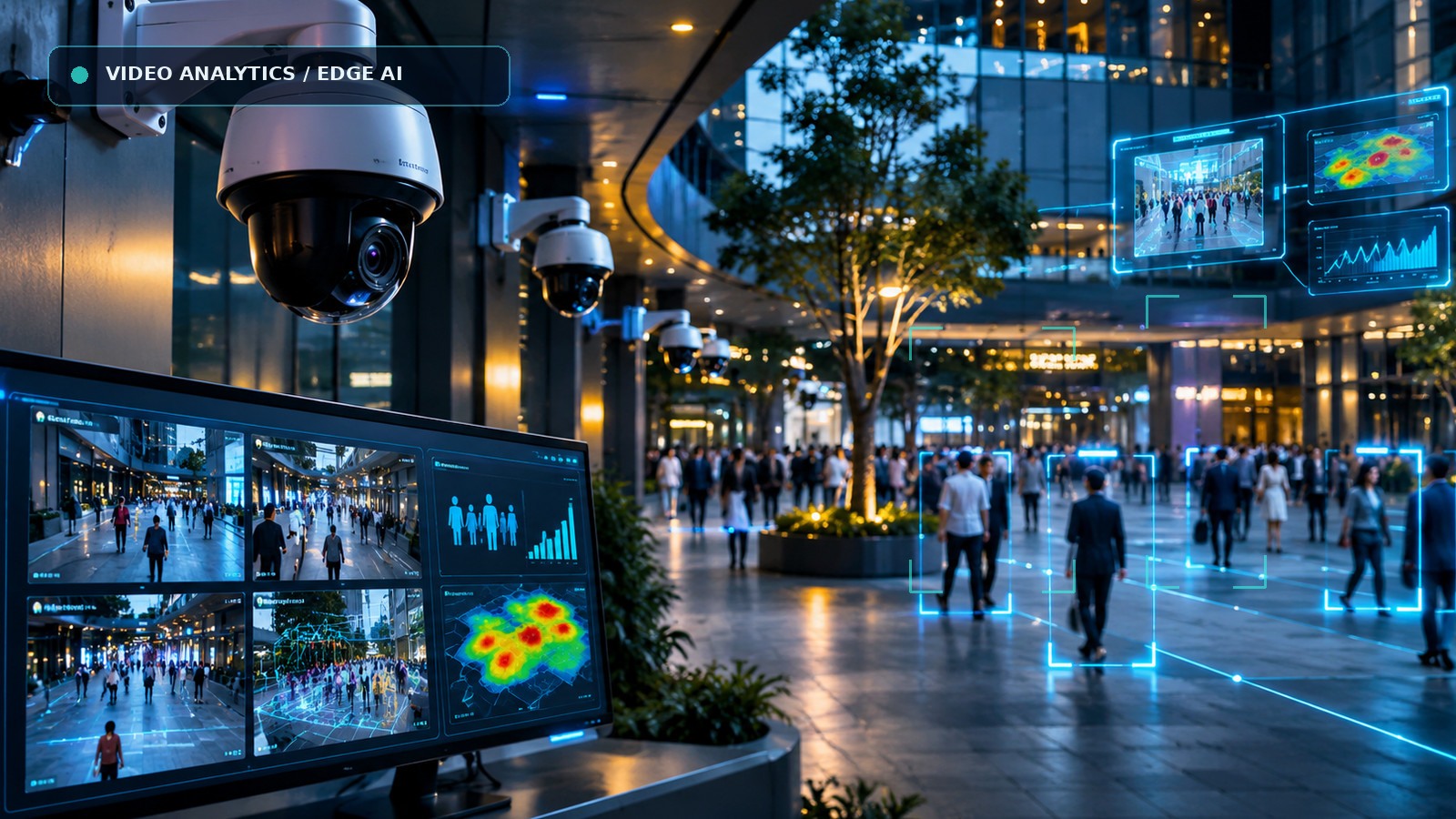
Illustrative concept · not a client deployment
Planning an edge or vision deployment?
Tell us the camera, the decision it has to support and the environment it lives in.